
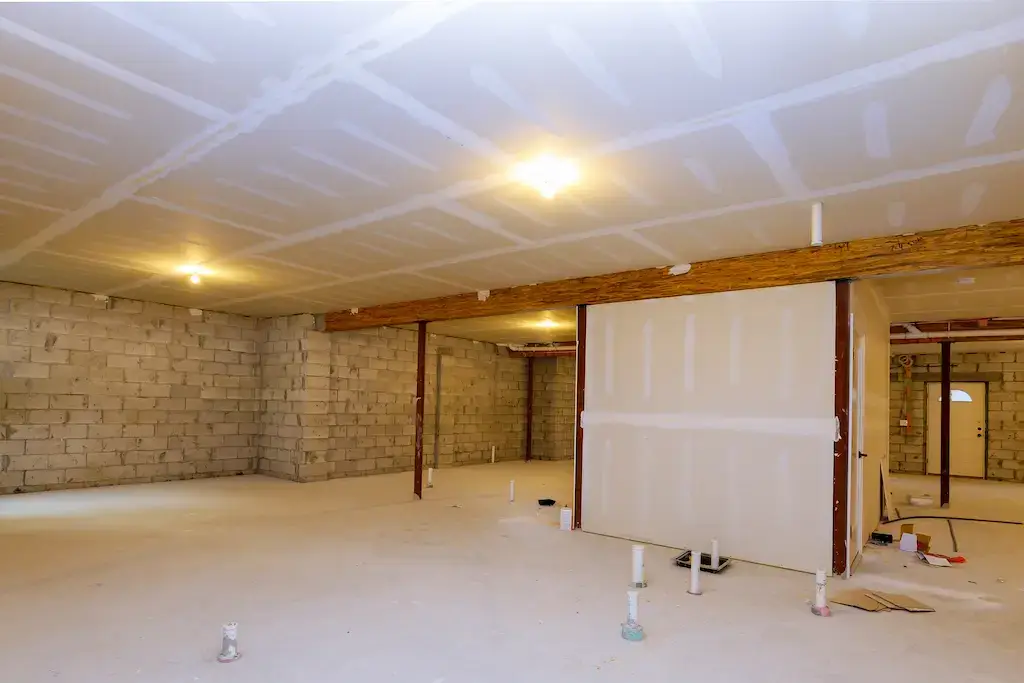
A basement can be freshly finished and still feel like the bargain version of a home. You know the vibe: harsh lighting, weird echoes, awkward posts, mismatched trim, and that “this was added later” feeling.
The good news is this is rarely about spending more. It’s usually about making better decisions in a few high-impact areas. If you’re planning a basement remodel or basement renovation in Northern Colorado (or anywhere, honestly), this list will save you money and prevent regret.
Quick takeaway before we dive in
If you want your finished basement to feel like a real level of the home, focus on three things first:
- Lighting that feels warm and intentional
- Finishes that match the main floor
- Layouts that feel planned, not improvised
Now let’s get specific.
Mistake 1: Treating lighting like an afterthought
The fastest way to make a new basement feel cheap is to rely on a single row of bright recessed lights and call it a day. Basements already get less natural light, so harsh overhead-only lighting makes everything feel flat and cold.
Do this instead:
- Use layered lighting: recessed lights for general light, plus wall sconces, lamps, and under-cabinet lighting where needed
- Add dimmers in key areas (family room, theater, bar, office)
- Plan lighting around how the room is used, not just where the joists allow a can light
If the goal is “main floor feel,” lighting is where you win it.
Mistake 2: Choosing builder-grade finishes that don’t match upstairs
Even a beautiful basement feels cheap when the trim profile, doors, and hardware scream “different house.” Mismatched baseboards, skinny casing, hollow core doors, and random black hardware when everything upstairs is brushed nickel can quietly ruin the whole impression.
Do this instead:
- Match trim style and proportions to the main level
- Use consistent door styles and hardware finishes
- Keep flooring transitions clean so it feels continuous, not patched together
This is one of the highest ROI moves in basement finishing.
Mistake 3: Picking the wrong basement flooring (or installing it the wrong way)
Flooring is where comfort and quality show up immediately. If the floor feels hollow, cold, or loud, the entire basement feels “cheap,” even if the walls look perfect.
Common basement flooring problems:
- LVP installed directly on concrete with no comfort layer
- Underlayment choices that amplify sound
- No moisture strategy, which leads to warping, odor, or premature wear
Do this instead:
- Choose basement-friendly flooring built for real use
- Consider an insulated subfloor option if comfort matters
- Make sure moisture is handled correctly before the flooring ever goes down
If you want the basement to feel like a living level, not a storage level, the floor needs to cooperate.
Mistake 4: Ignoring sound, echo, and “basement acoustics”
A lot of finished basements look great in photos and feel terrible in real life because the sound bounces everywhere. Open ceilings, hard floors, and long hallways create a hollow echo that makes the space feel unfinished.
Do this instead:
- Add sound control in ceilings and shared walls
- Use doors that shut cleanly (especially for offices and bedrooms)
- Balance hard surfaces with soft ones (rugs, upholstered seating, curtains)
- If you’re building a theater, plan sound early, not after drywall
A quiet basement feels expensive. A loud one feels like a garage.
Mistake 5: Designing the layout without thinking through real furniture and traffic flow
This is the classic “we’ll figure it out later” mistake. People frame rooms based on what fits on paper, not what fits in real life. Then you end up with a media room where the couch blocks a doorway, or a “game room” where the only place for a TV is behind a post.
Do this instead:
- Plan around furniture size, not just room dimensions
- Build zones that make sense: TV area, play area, bar area, storage
- Use posts and mechanical chases to your advantage with built-ins or intentional room divisions
A basement remodel should feel designed. Not “we found space for everything.”
Mistake 6: Making soffits and mechanical areas look sloppy
Soffits are unavoidable sometimes. The cheap feeling happens when they’re oversized, randomly boxed, or cut across the ceiling like a mistake you’re supposed to ignore.
Do this instead:
- Keep soffits straight, aligned, and minimal
- Group mechanical routes so you don’t have soffits everywhere
- Create a clean mechanical room plan with access panels where needed
- Finish the utility zones so the basement feels complete, not half-finished
Clean lines are underrated. They make basements feel intentional.
Mistake 7: Cutting corners on the basement bathroom addition
A basement bathroom is one of the biggest value-add features, but it’s also one of the easiest places to spot “cheap.” Bad lighting, weak ventilation, bargain fixtures, and awkward layouts make the whole basement feel like a rushed project.
Do this instead:
- Use proper venting and moisture strategy from day one
- Choose durable finishes and fixtures that match the quality upstairs
- Plan layout for comfort: spacing, door swing, mirror lighting, storage
If you’re adding a basement bathroom, build it like you plan to use it for 10 years, not like you plan to sell next month.
Mistake 8: Forgetting egress planning until the end
If you want a legal bedroom, guest suite, or anything resembling real sleeping space, egress is not optional. The cheap outcome happens when egress is an afterthought and the final bedroom ends up with a weird layout, odd window placement, or a rushed change order late in the project.
Do this instead:
- Decide early if you want a bedroom or a guest suite
- Plan egress window placement to bring in daylight and make the room feel bigger
- Build the room around the right safety requirements from the start
Bedrooms done right make a basement feel like a full home. Bedrooms done wrong feel like a converted storage room.
Mistake 9: Skipping built-in storage and pretending clutter won’t happen
Basements become clutter magnets when storage is not designed into the plan. Then the “new basement” quickly turns into boxes, seasonal items, random gym gear, and that one treadmill everyone regrets.
Do this instead:
- Add under-stair storage, closet storage, and built-ins where it makes sense
- Create a real storage zone that is easy to access, not a dark corner
- If you have a bar, theater, or gym, plan storage for those items specifically
A clean basement feels expensive. A cluttered basement feels cheap, no matter how nice the finishes are.
A simple checklist to keep your finished basement from feeling cheap
Before your basement finishing project starts, make sure you’ve decided:
- Lighting plan (layered, dimmable, placed for function)
- Finish matching plan (trim, doors, hardware, flooring transitions)
- Flooring comfort strategy (especially on concrete)
- Sound strategy (theater, office, bedrooms)
- Layout built around furniture, not just framing
- Soffit and mechanical plan (clean lines, planned access)
- Bathroom plan (venting, storage, lighting, fixture quality)
- Bedroom and egress decisions (early)
- Storage plan (built-in where possible)
If you check these boxes, your basement remodel won’t just look new. It will feel high quality.
Planning basement finishing in Northern Colorado?
If you’re considering basement finishing in Fort Collins, Loveland, Windsor, Timnath, Severance, Greeley, Johnstown, Eaton, or Berthoud, the smartest move is getting the plan right before the build starts. The layout, comfort upgrades, and finish consistency are what decide whether your basement feels like a true extension of your home.
When you’re ready, click Get a Detailed Quote, and we’ll help you map out a clear scope, realistic timeline, and a finish plan that makes the basement feel like it belongs.
Quick Answers
How do you make a finished basement look more expensive without blowing the budget?
Prioritize lighting, finish matching, and clean transitions. Most “cheap” basements fail in details, not square footage.
What is the biggest giveaway that a basement was finished cheaply?
Harsh overhead lighting and mismatched finishes. People notice it immediately, even if they can’t explain why.
What flooring works best for a basement remodel?
The best basement flooring depends on moisture conditions and how you’ll use the space. The key is choosing a basement-appropriate product and pairing it with a comfort and moisture strategy that fits the slab.
How long does basement finishing usually take?
Many basement finishing projects land around the 8 to 12 week range once materials are on site, but bathrooms, bars, egress work, and custom rooms can extend the timeline.
Should I add the basement bathroom now or later?
If you know you want it eventually, it’s often smarter to do it now. Bathrooms impact layout, plumbing planning, and electrical decisions, and retrofitting later can cost more.
Does adding a bedroom increase basement value?
It can, especially when it’s done code-correct with proper egress, and it feels like a real suite. Bedrooms that feel improvised can hurt more than they help.
If you want, I can localize this blog into a city-targeted version (example: “Loveland Basement Finishing” or “Windsor Basement Remodel”) and tune the keywords, intro, and FAQs to match that city page perfectly.